

The idea of performing an ultrasound exam using just your smartphone sounds like science fiction. But it is already happening right now.
Thanks to groundbreaking portable technology and dedicated apps, healthcare professionals and curious individuals can access ultrasound imaging directly from their mobile devices.
No bulky machines. No expensive hospital visits. Just your phone and a revolutionary wireless probe.
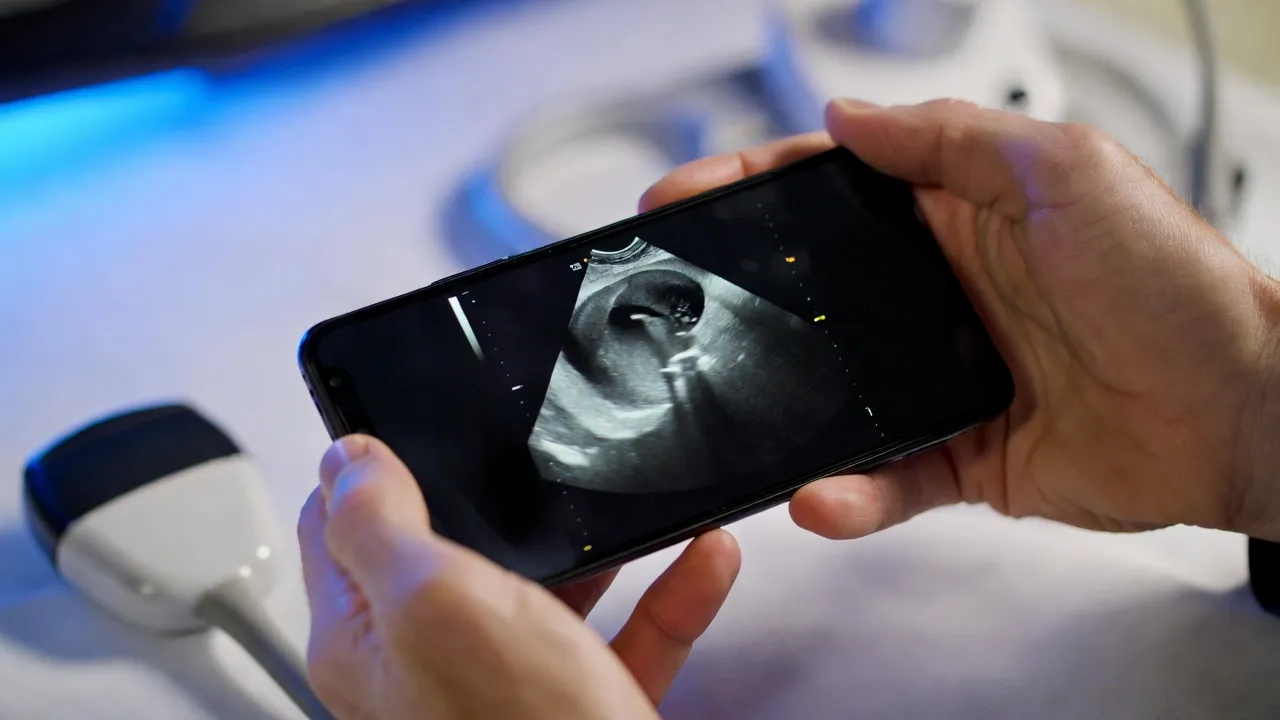
In this complete guide, you will discover exactly how this technology works, which apps to download, and how this innovation is reshaping the future of medical diagnostics across the globe.
If you have ever wondered whether your phone could truly become a medical imaging tool, the answer is yes. And we are about to show you how.
What Does It Mean to Turn Your Phone Into an Ultrasound?
Let us be clear from the start.
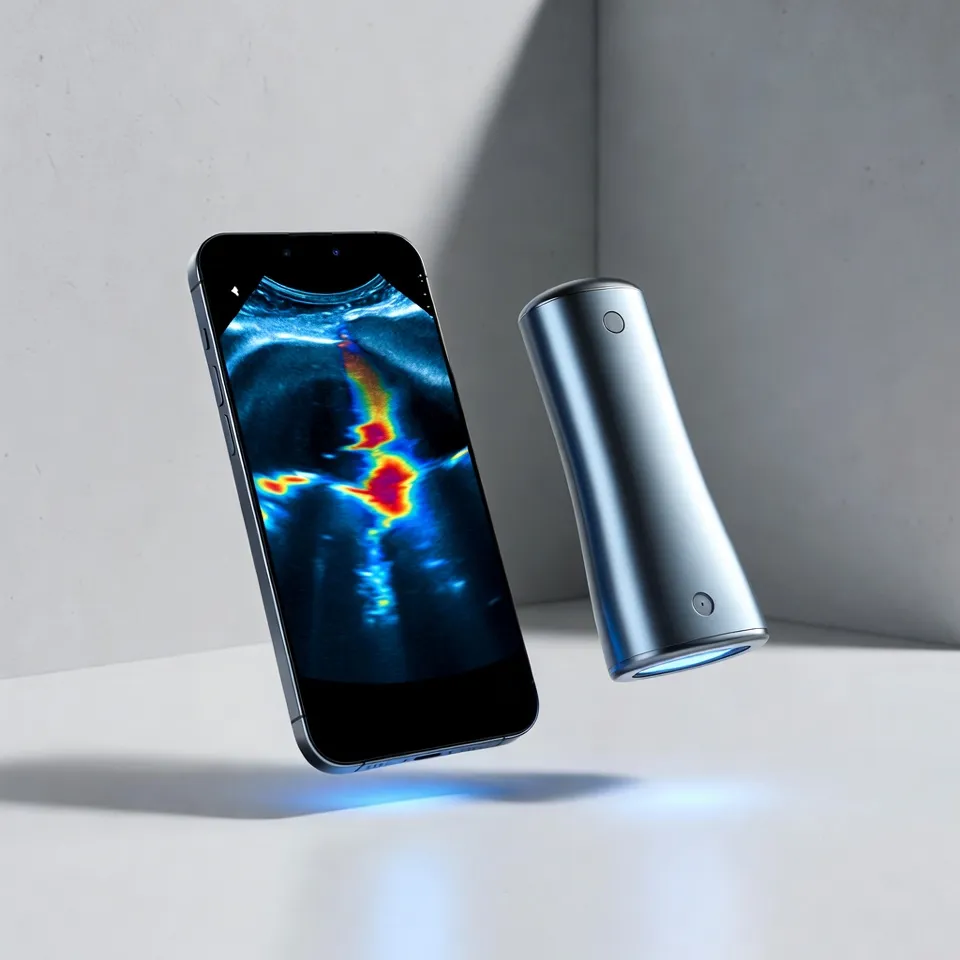
Your phone alone cannot generate ultrasound waves. It does not have a built-in transducer capable of sending and receiving sound signals through your body.
However, when paired with a compact wireless ultrasound probe, your smartphone becomes the display screen, the processing unit, and the storage device for real ultrasound images.
This is exactly what devices like the Vscan Air by GE Healthcare accomplish.
The probe connects wirelessly to an app installed on your phone. You place the probe on the body. The images appear instantly on your screen.
It is that simple.
How the Technology Actually Works
Here is a quick breakdown of the process:
- The wireless probe emits ultrasound waves into the body
- Those waves bounce off internal organs and tissues
- The probe captures the returning signals
- Data is transmitted via Wi-Fi or Bluetooth to your phone
- The dedicated app processes the signals and displays real-time images
The entire system fits in your pocket. That is the revolution.
The Vscan Air: The Leading Portable Ultrasound Device
Among all portable ultrasound solutions available today, the Vscan Air stands out as the most recognized and widely adopted.
Developed by GE Healthcare, one of the largest medical technology companies in the world, this device has been designed specifically for healthcare professionals who need fast, reliable imaging on the go.
Key Features of the Vscan Air
- Dual probe design covering both shallow and deep imaging
- Crystal clear image quality comparable to larger machines
- Wireless connectivity to Android and iOS devices
- Battery life that supports a full day of clinical use
- Lightweight design weighing less than a standard smartphone
- Cloud storage capability for sharing images with colleagues
| Feature | Details | Availability |
|---|---|---|
| App Name | Vscan Air Wireless Ultrasound | Free Download |
| Platform | Android and iOS | Google Play and App Store |
| Rating | 3.7 stars | Over 100K installations |
| Connectivity | Wireless Bluetooth and Wi-Fi | Global |
| Probe Required | Yes, Vscan Air hardware probe | Sold separately |
| Use Cases | Cardiac, abdominal, obstetric, musculoskeletal | Clinical settings |
Download the Vscan Air App on Google Play
Download the Vscan Air App on the App Store
Best Free Ultrasound Apps for Your Phone
The Vscan Air app is not the only option available. Several other applications and platforms offer ultrasound-related functionality for smartphones.
Some are designed for professional medical use. Others serve as educational tools or simulators for students learning sonography.
Here are the top options worth exploring.
1. Vscan Air Wireless Ultrasound
This is the official companion app for GE Healthcare’s portable probe. It delivers real-time imaging, measurement tools, and DICOM-compatible file export.
Best for practicing clinicians and emergency medicine professionals.
2. Butterfly iQ
The Butterfly iQ system uses a single crystal transducer that connects to your phone. The companion app offers AI-powered guidance that helps users obtain better images even with limited training.
Best for primary care physicians and remote clinics.
3. Clarius Ultrasound
Clarius offers a range of wireless handheld scanners with a dedicated mobile app. The image quality is impressive, and the app includes telemedicine features for remote consultations.
Best for specialists who need high-resolution imaging in the field.
4. Ultrasound Simulator Apps
For students and those curious about ultrasound technology, simulator apps provide a risk-free environment to learn anatomy and probe positioning.
These apps do not require hardware probes. They use pre-recorded cases and interactive models.
Best for medical students and sonography trainees.
| App | Hardware Required | Price | Best For |
|---|---|---|---|
| Vscan Air | Vscan Air Probe | Free app, paid probe | Emergency and general medicine |
| Butterfly iQ | Butterfly Probe | Subscription model | Primary care and rural clinics |
| Clarius | Clarius Scanner | Free app, paid hardware | Specialists and telemedicine |
| Simulator Apps | None | Free or low cost | Students and education |
Who Can Actually Use These Ultrasound Apps?
This is an important question. Not everyone should be interpreting medical ultrasound images without proper training.
These tools are primarily designed for:
- Licensed physicians and surgeons
- Emergency medicine professionals
- Nurses with point-of-care training
- Paramedics in the field
- Medical students under supervision
- Veterinarians performing animal diagnostics
If you are not a healthcare professional, you can still download the apps to explore the technology and understand how it works. Some apps offer demo modes and educational content that anyone can access.
However, interpreting diagnostic images should always be done by a trained professional.
How to Download and Set Up Your Phone Ultrasound App
Getting started is straightforward. Follow these steps.
Step 1: Open the Google Play Store or Apple App Store on your phone.
Step 2: Search for the app name. For example, type “Vscan Air Wireless Ultrasound.”
Step 3: Tap Install or Download. The app is free.
Step 4: Open the app and create your account. Some apps require a professional license verification.
Step 5: If you have a compatible wireless probe, pair it with your phone via Wi-Fi or Bluetooth.
Step 6: Begin scanning. The app will display real-time ultrasound images on your screen.
That is it. The entire setup takes less than five minutes.
Download the Vscan Air App Now
Real Stories: How Portable Ultrasound Is Saving Lives
The impact of this technology goes far beyond convenience. It is literally saving lives in situations where traditional equipment is unavailable.
Emergency Diagnosis in Remote Villages
A physician working in a rural clinic in sub-Saharan Africa reported using a portable ultrasound probe connected to a smartphone to diagnose an ectopic pregnancy. The nearest hospital was over four hours away. The quick diagnosis allowed the team to arrange emergency transport immediately.
Without that pocket-sized device, the delay could have been fatal.
Battlefield Medicine
Military medics have adopted handheld ultrasound devices for trauma assessment in combat zones. The ability to quickly check for internal bleeding using just a phone and a wireless probe has transformed how injuries are evaluated on the field.
Home Health Visits
Visiting nurses in the United States are now carrying portable ultrasound probes during home health visits. They can assess fluid buildup in the lungs of heart failure patients without requiring an ambulance trip to the emergency room.
These stories demonstrate that the smartphone ultrasound revolution is not a gimmick. It is a genuine advancement in healthcare delivery.
Graph Description: Growth of Portable Ultrasound Adoption
Imagine a line graph covering the years 2018 through 2025.
The vertical axis represents the number of portable ultrasound devices shipped globally, measured in thousands of units.
The horizontal axis shows each year.
In 2018, the line starts at approximately 50,000 units. It rises steadily through 2020, reaching around 120,000 units. After 2020, the growth accelerates sharply, fueled by the global pandemic and the need for point-of-care diagnostics.
By 2025, the line reaches over 500,000 units shipped annually.
A secondary dotted line shows the number of ultrasound app downloads, which follows a similar upward trend but at an even steeper angle, surpassing 2 million downloads by 2025.
This graph illustrates the explosive growth of portable ultrasound technology and the increasing role of smartphones in modern medical imaging.
The Future of Phone-Based Ultrasound Technology
This technology is still evolving rapidly. Here is what experts predict for the coming years.
AI-Powered Diagnostics: Future apps will use artificial intelligence to automatically detect abnormalities in ultrasound images. The software will highlight potential issues and suggest diagnoses, helping less experienced users make better decisions.
Cheaper Hardware: As manufacturing scales up, the cost of wireless ultrasound probes will continue to drop. Within a few years, these devices could become as affordable as a standard medical stethoscope.
Integration with Electronic Health Records: Ultrasound apps will seamlessly connect with hospital EHR systems, allowing instant upload and sharing of patient imaging data.
5G Connectivity: Faster mobile networks will enable real-time telemedicine ultrasound sessions, where a specialist in one country guides a field worker in another through an exam.
The smartphone in your pocket is becoming one of the most powerful medical tools ever created.
Frequently Asked Questions (FAQ)
Can I really perform an ultrasound with just my phone?
You need a compatible wireless ultrasound probe in addition to the app on your phone. The phone serves as the display and processing unit, but the probe generates the actual ultrasound waves.
Is the Vscan Air app free to download?
Yes. The app itself is free on both Google Play and the App Store. However, you need to purchase the Vscan Air probe separately to perform actual scans.
Do I need medical training to use these apps?
For diagnostic purposes, yes. Interpreting ultrasound images requires proper training. However, anyone can download the app to explore its features and educational content.
What phones are compatible with ultrasound apps?
Most modern Android and iOS smartphones are compatible. Check the specific app requirements for minimum operating system versions and hardware specifications.
How much does a portable ultrasound probe cost?
Prices vary. The Vscan Air probe costs several thousand dollars. More affordable options like some Clarius models are available at lower price points. Prices continue to decrease as the technology matures.
Can veterinarians use these ultrasound apps?
Absolutely. Many veterinarians use portable ultrasound devices to examine animals in the field, particularly for large animal practices where transporting equipment is impractical.
Is the image quality comparable to traditional ultrasound machines?
For many clinical applications, yes. While full-size hospital machines still offer superior resolution for complex cases, portable devices provide more than sufficient quality for point-of-care assessments.
Can I save and share ultrasound images from my phone?
Yes. Most apps allow you to save images and clips, export them in DICOM format, and share them via cloud storage or secure messaging with other healthcare professionals.
Final Thoughts
The ability to turn your phone into an ultrasound device represents one of the most significant advances in accessible healthcare technology.
What once required a room full of expensive equipment now fits in the palm of your hand.
Whether you are a medical professional looking to enhance your diagnostic capabilities or simply someone fascinated by how technology is transforming medicine, this is a development worth paying attention to.
The tools are available right now. The apps are free to download. And the impact on global health is only beginning.
Ready to see what else your phone can do for healthcare? Continue reading our next article to discover the best portable medical apps that every smartphone owner should know about.
